
The Emotional Recovery Home
A place where healing is held in community.
When most people hear the word recovery, they think of treatment centers for addiction. Those spaces are necessary and lifesaving. But recovery is older and wider than that. Recovery is what the human body reaches for anytime it has carried too much for too long without rest, without safety, and without somewhere to lay it down.
Many women are living in states of prolonged emotional exertion — holding families together, navigating uncertainty, absorbing grief, adapting to constant change, and continuing to show up even when their own inner ground feels unsteady. Much of this labor is invisible. Much of it goes unnamed. But the nervous system keeps the record. Over time, this accumulation does not simply disappear. It lives in the body as exhaustion, vigilance, disconnection, and quiet depletion.
The Emotional Recovery Home exists because there must be places where women are no longer asked to carry everything alone.
A place where the body can soften its guard.
Where the nervous system can remember what safety feels like.
Where rest is not earned, but allowed.
Here, women are given space to step out of survival rhythms and into restoration rhythms. Through culturally grounded practices, shared presence, time on the land, and communal care, the body is supported in doing what it has always known how to do — recover balance when the conditions are safe enough.
The Emotional Recovery Home recognizes that recovery is not only about crisis. It is about tending to the quiet accumulation of life — the transitions, the caregiving, the losses, the responsibilities, and the emotional labor that often go unsupported. In this way, the Emotional Recovery Home expands the definition of recovery. Recovery is not fixing what is broken. It is restoring relationship — with the body, with community, with the land, and with the deeper intelligence that sustains life.
For women who have carried others, held others, and steadied others, this home exists so they may finally be held, steadied, and restored in return.
This is not escape.
This is not withdrawal.
This is recovery as return.
This is coming home.
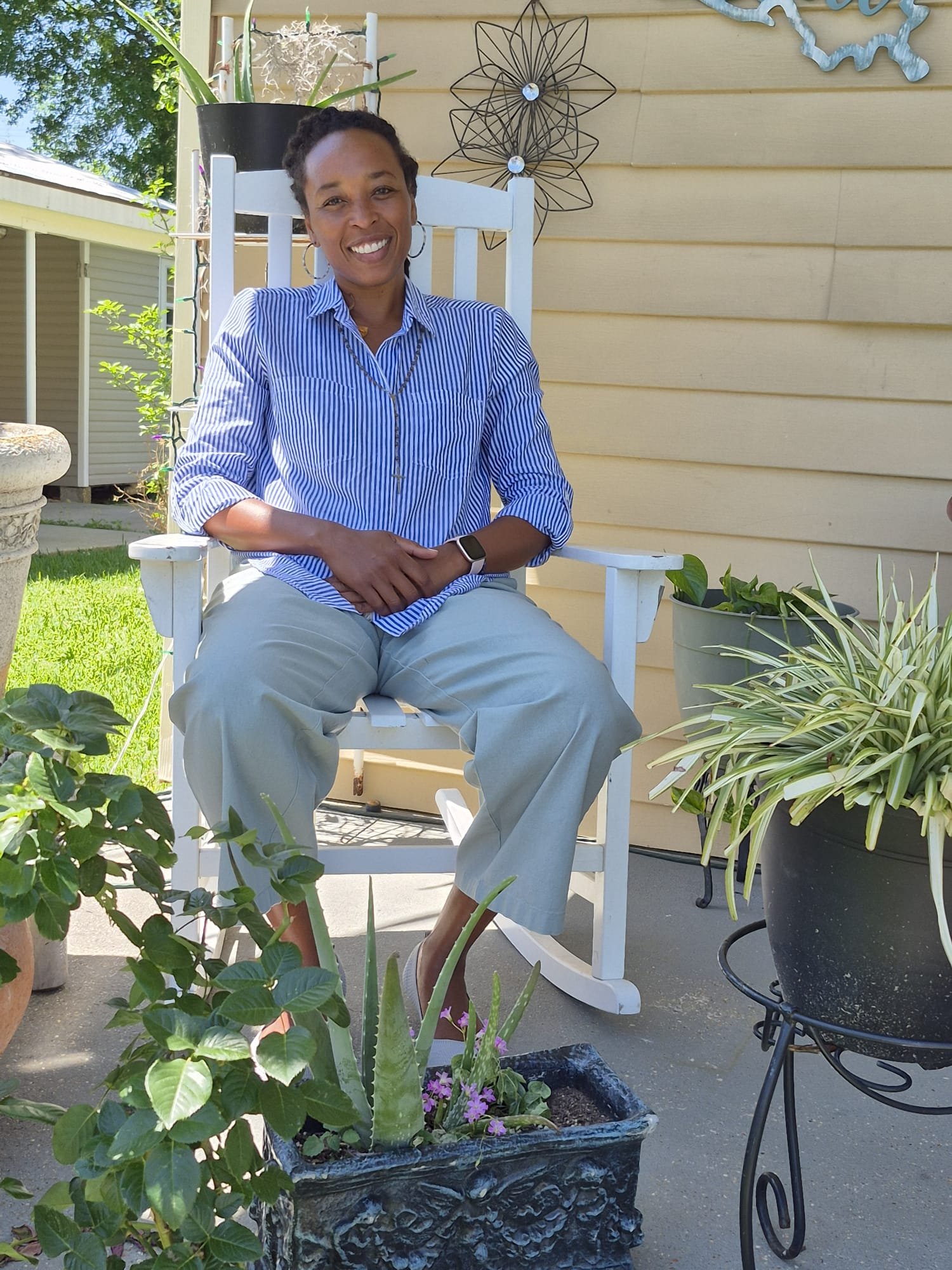
Nestled in the heart of my hometown, Thibodaux, a small country town in deep south Louisiana, the Emotional Recovery Retreat space is a sanctuary for people to heal, restore, and transform. Hugging the banks of Bayou Lafourche, 60 miles southwest of New Orleans, this sacred space draws inspiration from the love and safety I experienced as a child at my grandmother’s home. It was there that I first learned the power of receiving unconditional care, a space where I felt both physically and emotionally nourished, especially during times of overwhelming stress and uncertainty during my childhood.
My grandmother’s home has been a refuge to so many in Thibodaux - a French word meaning bold and brave. It was where the weight of the world seemed lighter, where the warmth of her sweet potato pies filled the air, and where her big-hearted gestures—like turning her living room into a cozy sleeping space for all the grandkids—provided a sense of security and belonging. It was within these walls that I first felt what it meant to truly heal, emotionally and spiritually.
That is the essence of the Emotional Recovery Home. This space is a Wellspring for Women, a space to come to rest and feel restored spiritually, mentally, emotionally, and physically as the body remembers what the land has always known: restoration happens in safety, in slowness, and together. just as I did at my grandmother’s side.